Blog
Door Swelling During Monsoon: Causes, Prevention, and Solutions

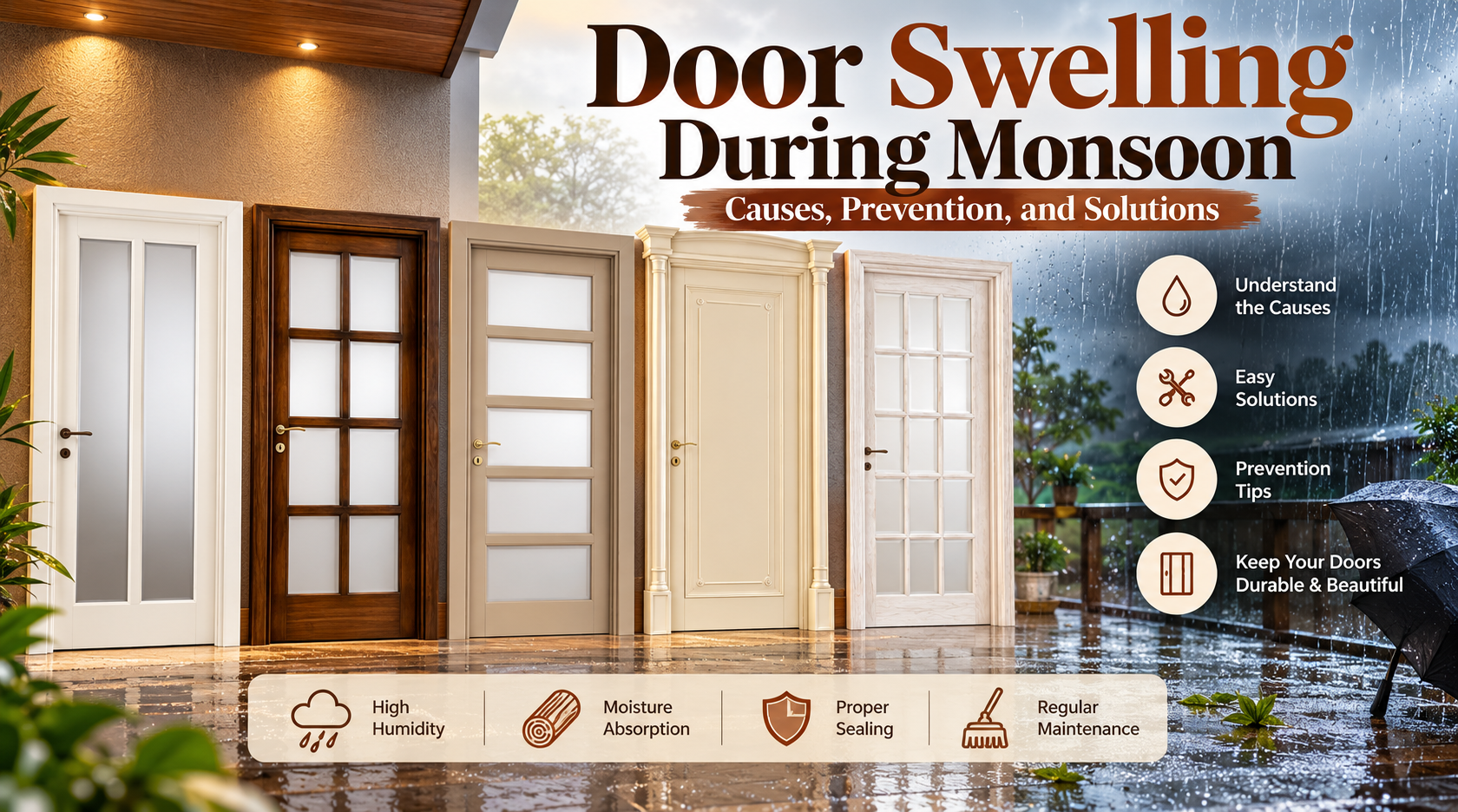
Wooden door swelling is a common issue during the monsoon season, when increased humidity causes wooden doors to absorb moisture.
In India, changing humidity levels during the rainy season can affect wooden doors, especially those exposed to dampness or inadequate sealing. The good news is that understanding the causes and following the right maintenance practices can help prevent damage and keep doors working smoothly.
In this guide, we explain why wooden doors swell during monsoon, how to fix a swollen door, and how to protect your doors from moisture damage.
Why Do Wooden Doors Swell During Monsoon?
Wood is a natural, hygroscopic material, which means it absorbs and releases moisture depending on the surrounding environment. During the monsoon, humidity levels rise, allowing wood to absorb moisture from the air. One of the main reasons for wooden door swelling is excessive moisture absorption, especially when the door is exposed to rainwater or damp surroundings.
As the moisture content increases, the wood expands. Even a small amount of expansion can reduce the clearance between the door and its frame, making the door stick or become difficult to operate.
Here are some common causes of wooden door swelling in monsoon:
1. High Humidity Levels
High humidity is one of the main reasons wooden doors swell during the rainy season. When wood absorbs moisture from humid air, it expands across its grain.
Doors with unsealed surfaces or exposed edges may be more vulnerable to moisture absorption.
2. Direct Contact with Rainwater
Rainwater entering through an open entrance, balcony, or poorly protected doorway can affect the door’s lower edges. Repeated exposure to water may cause swelling, peeling finishes, or long-term damage.
3. Poor Sealing and Finishing
A protective finish helps reduce moisture absorption. If the paint, polish, or sealant is damaged, moisture can enter the wood more easily.
The top, bottom, and side edges of a door are especially important to seal properly.
4. Damp Door Frames and Floors
Sometimes, the problem is not limited to the door itself. Damp walls, leaking pipes, wet floors, or moisture around the frame can cause alignment problems and make the door difficult to close.
Signs Your Wooden Door Is Swelling
Recognizing the early signs of wooden door swelling can help you address the issue before it becomes more serious.
Look for these common symptoms:
- The door sticks when opening or closing.
- The edges rub against the door frame.
- The door does not latch properly.
- The bottom edge appears swollen or damaged.
- Paint or polish starts peeling.
- The door becomes difficult to operate after rainfall.
If your door is sticking, first check whether the issue is caused by moisture, loose hinges, or a misaligned frame. Not every difficult-to-open door is swollen.

How to Fix a Swollen Wooden Door
If you are searching for how to fix a swollen wooden door, the right solution depends on the severity of the problem.
1. Allow the Door to Dry
Start by reducing moisture exposure. Keep the affected area ventilated and use a fan or air conditioner to improve air circulation.
If the door is wet, wipe it with a clean, dry cloth. Avoid applying excessive heat, which may damage the finish or cause uneven drying.
2. Check the Hinges and Door Alignment
Loose hinges can make a door sag or rub against the frame. Inspect the hinge screws and tighten them if needed.
If the door is misaligned, adjusting the hinges may solve the problem without sanding or trimming the door.
3. Identify the Rubbing Area
Carefully inspect the edges to find where the door touches the frame. A small amount of friction may sometimes be reduced temporarily with an appropriate door lubricant or wax, depending on the surface and finish.
This is not a permanent solution for moisture-related swelling.
4. Sand or Trim Only When Necessary
If the door remains stuck after drying and alignment checks, a carpenter may lightly sand or plane the affected edge.
Avoid removing too much material. Once the humidity decreases, the door may shrink back toward its original size, leaving an unwanted gap.
5. Reapply a Suitable Protective Finish
After the door has dried and any necessary repairs are complete, apply a suitable wood sealer, paint, varnish, or polish according to the manufacturer’s instructions.
Proper finishing helps reduce future moisture absorption and improves the durability of the door.
How to Prevent Wooden Door Swelling During Monsoon
Prevention is usually easier and less expensive than repairing a damaged door. Follow these wooden door maintenance tips before and during the rainy season. Proper sealing and regular maintenance can help prevent wooden door swelling and keep your doors in good condition.
1. Seal All Door Edges Properly
Make sure the top, bottom, and side edges are protected with a suitable finish. These areas can be overlooked during installation or refinishing.
Proper edge sealing can help reduce moisture entry.
2. Choose the Right Door Material
When selecting a door, consider the location, exposure to moisture, and intended use.
For areas that may experience dampness, ask the supplier about moisture-resistant construction, suitable finishes, and the recommended installation method. The right choice depends on the product’s specifications rather than appearance alone.
3. Improve Ventilation
Good ventilation helps reduce moisture buildup indoors. Keep rooms ventilated when weather conditions allow, and address dampness caused by leaks or poor airflow.
A dehumidifier may be useful in persistently damp rooms.
4. Prevent Water from Reaching the Door
For entrance doors exposed to rain, consider practical measures such as a suitable overhang, drainage improvements, or weather seals where appropriate.
Avoid allowing water to collect near the door frame or floor.
5. Inspect Doors Before the Monsoon
Check your doors before the rainy season begins. Look for peeling polish, damaged seals, loose hinges, cracks, or signs of dampness.
Timely maintenance can help reduce the risk of wooden door swelling in monsoon.
How to Choose the Best Wooden Doors for Monsoon Conditions
If you are planning to install new doors, consider more than just the design. The right door should suit the environment and the requirements of the space.
Before choosing wooden doors for Indian homes, review these factors:
| Factor | What to Check |
|---|---|
| Material | Ask about the door’s construction and moisture resistance |
| Finish | Check whether the surface and edges are properly sealed |
| Installation | Ensure the frame, clearance, and fitting are suitable |
| Location | Consider exposure to rain, humidity, and damp floors |
| Maintenance | Review recommended cleaning and refinishing practices |
| Warranty | Check the manufacturer’s coverage and care instructions |
For kitchens, bathrooms, and other moisture-prone spaces, ask a qualified supplier or installer which door type is appropriate for that specific location.
Frequently Asked Questions
Why do wooden doors swell during the rainy season?
Wood absorbs moisture from humid air and expands. During the monsoon, this expansion can reduce the gap between the door and frame, causing the door to stick.
How can I fix a swollen wooden door?
First, reduce moisture exposure and allow the door to dry. Check the hinges and alignment. If the door continues to rub against the frame, a carpenter may need to lightly sand or adjust the affected edge.
How can I prevent wooden door swelling in monsoon?
Seal the door’s surfaces and edges properly, improve ventilation, prevent direct rainwater exposure, and inspect the door before the rainy season.
Should I sand a swollen door immediately?
No. Allow the door to dry first and check the hinges and frame alignment. Sanding too early or removing too much material may create a permanent gap after the wood dries.
Which wooden door is suitable for monsoon conditions?
The best option depends on the location, construction, finish, and exposure to moisture. Ask the manufacturer or supplier about moisture-resistant materials and suitable installation practices.
Conclusion
Wooden door swelling is a common monsoon problem caused mainly by increased humidity and moisture exposure. However, regular maintenance, proper sealing, good ventilation, and timely repairs can help keep doors functional throughout the rainy season.
If your door becomes difficult to open or close, identify the cause before sanding or trimming it. For long-term performance, choose a door with suitable construction and finishing for its intended location. By following these simple maintenance tips, you can reduce the risk of wooden door swelling and improve the durability of your wooden doors.
With the right care and installation, wooden doors can remain attractive, durable, and easy to use through changing weather conditions.


 Single Main Doors
 Double Main Doors
 Glass Main Doors

 Bedroom Doors
 Bathroom Doors

 Teak Wood Doors
 Oak Wood Doors



 Custom Door Finishes