Blog
How to Choose Wooden Door Manufacturers for Large Construction Projects in India

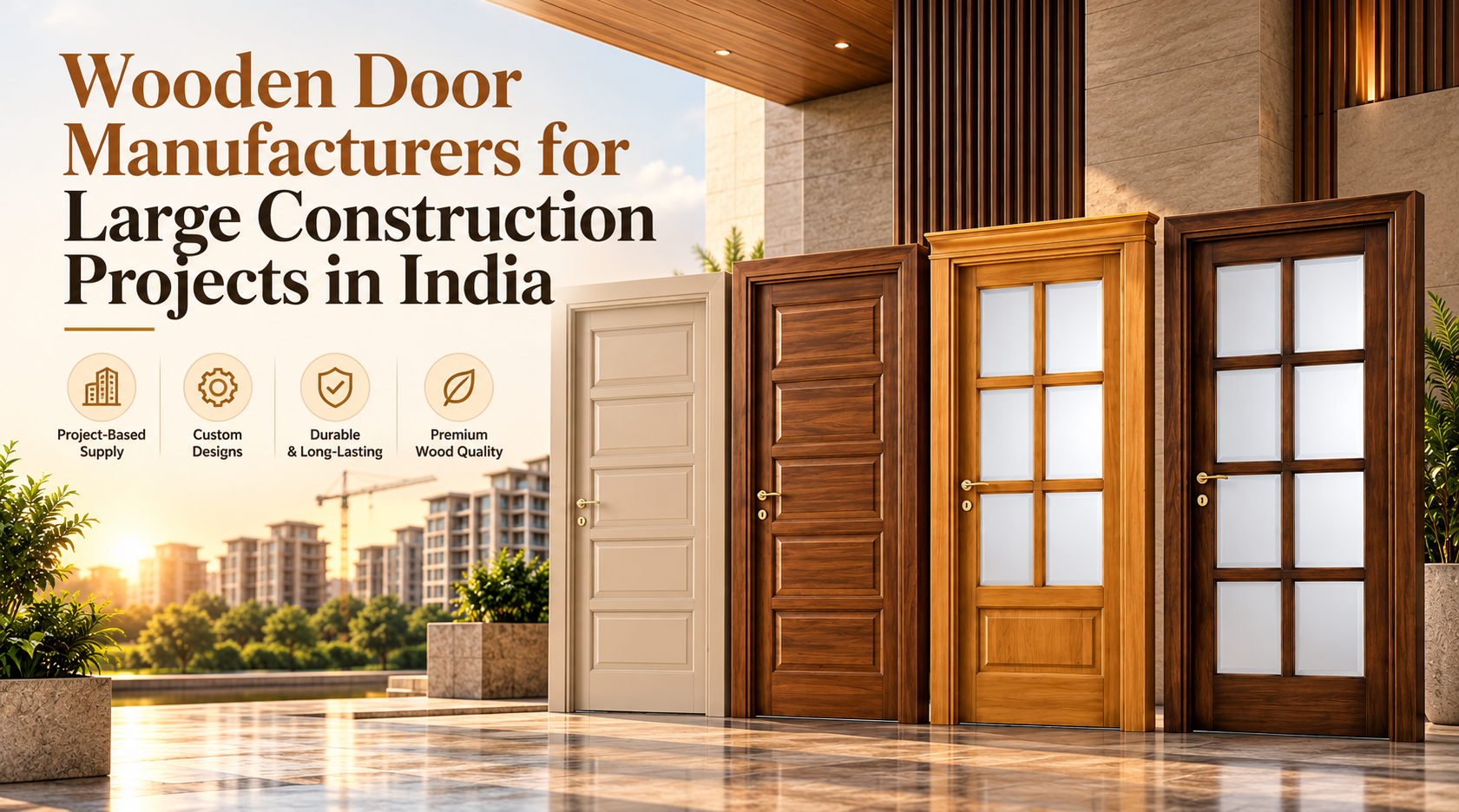
Choosing the right doors is an important part of planning residential and commercial construction projects. Builders, architects, contractors, and real estate developers need doors that meet design specifications, offer suitable durability, and arrive on time. When hundreds of doors are required for apartments, hotels, offices, or housing developments, selecting the right manufacturing partner becomes even more important.
Reliable wooden door manufacturers for construction projects can help streamline bulk procurement, maintain product consistency, and coordinate deliveries with construction schedules. However, comparing suppliers requires more than looking at the price per door. Buyers should evaluate manufacturing capacity, material quality, customization options, quality control, and after-sales support.
This guide explains how to select the right wooden door manufacturer for large construction projects in India.
1. What Builders Should Look for in a Wooden Door Manufacturer
The first step is to identify manufacturers with experience in bulk orders and project-based supply. A supplier serving individual homeowners may not have the production capacity or coordination processes required for a large development.
Before shortlisting manufacturers, evaluate these essential factors:
- Project experience: Check whether the manufacturer has supplied doors for residential complexes, hotels, offices, or institutional buildings.
- Product range: Look for suitable options, including solid wood doors, engineered wooden doors, flush doors, and decorative panel doors.
- Manufacturing capabilities: Confirm that the supplier can meet your required quantities without compromising quality.
- Customization: Ensure that door dimensions, finishes, designs, and hardware preparations can match your specifications.
- Quality assurance: Ask about material inspections, dimensional checks, finishing standards, and documented quality procedures.
- Commercial reliability: Review quotations, delivery commitments, warranty conditions, and communication practices.
Experienced bulk wooden door suppliers in India should be able to explain their manufacturing process clearly and provide product specifications before an order is confirmed.
2. Manufacturing Capacity and Bulk Order Requirements
Large construction projects often require hundreds or thousands of doors across different buildings, floors, and construction phases. A manufacturer must have adequate equipment, trained staff, raw material availability, and production planning to handle these requirements.
Start by sharing your estimated door quantities, delivery schedule, and project specifications. Ask the manufacturer how much production capacity can be allocated to your order and whether deliveries can be divided into manageable batches.
For example, a residential apartment project may require different doors for bedrooms, bathrooms, kitchens, utility areas, and common spaces. These doors may have different sizes, finishes, and technical requirements.
A dependable wooden door manufacturer for builders should be able to:
- Produce consistent doors in the required quantities.
- Maintain separate specifications for different door categories.
- Provide samples before beginning mass production.
- Schedule deliveries according to construction progress.
- Manage repeat orders for subsequent project phases.
It is also worth checking how the manufacturer handles raw material shortages, production delays, and rejected products. Written production and delivery commitments help reduce procurement risks.
3. Wood Quality, Seasoning and Quality Control
Wood quality directly influences door stability, appearance, and service life. Poorly dried timber, unsuitable materials, or inconsistent manufacturing processes can contribute to warping, cracking, dimensional changes, and finishing defects.
Before selecting a manufacturer, ask about the wood species, moisture control, internal construction, adhesives, surface materials, and finishing methods used for the chosen door.
Wood seasoning and moisture management: Properly dried timber helps reduce dimensional movement. This is particularly relevant in India, where humidity and seasonal moisture variations can affect wooden products. Ask how the manufacturer monitors moisture content and prepares doors for their intended environment.
Material and construction quality: Solid wood, engineered wood, and flush doors differ in construction, appearance, cost, and maintenance requirements. Select the product based on the intended application rather than appearance alone.
Quality inspections: Confirm whether doors are checked for dimensions, surface defects, finish consistency, and other agreed specifications before dispatch.
Special performance requirements: If a project requires fire-rated, acoustic, or other specialized doors, verify the relevant test reports and certifications for the exact door assembly. Standard wooden doors should not automatically be assumed to meet these requirements.
A clear quality checklist agreed upon before production can help builders assess incoming products consistently.
4. Custom Door Sizes and Architectural Specifications
Construction projects often require multiple door sizes and designs. Bedroom doors, bathroom doors, entrance doors, office doors, and service-area doors may differ in thickness, finish, hardware, and performance requirements.
This makes customization an important factor when choosing commercial wooden door manufacturers.
Before production begins, provide the manufacturer with approved architectural drawings, a door schedule, quantity details, and technical specifications.
Important considerations include:
- Dimensions: Specify the required width, height, and thickness for each door.
- Design and finish: Choose suitable veneers, laminates, paint finishes, colours, and decorative patterns.
- Frames: Confirm whether door frames are included and ensure compatibility with site openings.
- Hardware: Specify requirements for hinges, locks, handles, and other fittings.
- Installation clearances: Coordinate door dimensions and tolerances with the contractor and site team.
- Sample approval: Approve a representative sample or mock-up before mass production.
For example, a hotel project may prioritize consistent finishes across guest rooms, while a residential development may need several door styles for different apartment configurations.
Approving samples and technical drawings in advance reduces the risk of mismatched finishes, incorrect dimensions, and costly modifications during installation.
5. Comparing Pricing, Lead Times and Delivery
Price is important when purchasing doors in bulk, but the lowest quotation does not always provide the best overall value. Differences in construction, materials, finishes, hardware, packaging, and transportation can explain variations between suppliers.
Use the following comparison to evaluate quotations more effectively.
| Factor | What to check |
|---|---|
| Material | Wood species, core construction, and surface finish |
| Pricing | Unit cost, taxes, packaging, and transportation |
| Production | Manufacturing capacity and lead time |
| Delivery | Batch schedule and delivery location |
| Quality | Inspection procedures and approved specifications |
| Warranty | Coverage, exclusions, and defect resolution |
Lead times should be confirmed in writing after the manufacturer reviews quantities, specifications, sample approvals, and payment terms.
For Indian construction projects, also consider transportation distances, seasonal weather, unloading arrangements, and on-site storage conditions. Doors should be stored according to the manufacturer’s recommendations, protected from moisture, and kept away from conditions that could cause damage or dimensional changes.
Before confirming the order, clarify the process for reporting transit damage, replacing defective products, and managing delayed deliveries.
6. Questions to Ask Before Finalizing a Supplier
Before choosing a manufacturer, ask questions that establish whether the supplier can meet your technical, commercial, and scheduling requirements.
- What is your production capacity for the required door specifications?
- Have you supplied doors for projects of a similar size and type?
- Which wood species, engineered materials, and finishes do you offer?
- Can you manufacture doors according to our approved drawings and door schedule?
- Can we inspect samples before approving bulk production?
- What quality checks are completed before dispatch?
- Can you arrange phased deliveries to match construction progress?
- Are frames, hardware, packaging, and transportation included in the quotation?
- What warranty applies, and how are manufacturing defects handled?
- Can you provide relevant technical documentation and test reports where required?
Where possible, review previous project references, inspect samples, and verify manufacturing capabilities before placing a large order. A written agreement should specify quantities, dimensions, materials, finishes, delivery milestones, payment terms, and procedures for handling non-conforming products.
These checks can help builders distinguish reliable project suppliers from vendors whose capabilities may not match the requirements.
7. Which Wooden Door Type Is Suitable for Your Project?
The right door type depends on the application, budget, design, and performance requirements.
| Door type | Potential application | Main consideration |
|---|---|---|
| Solid wood doors | Premium residences, selected entrances, and interiors | Natural appearance, weight, maintenance, and moisture management |
| Engineered wooden doors | Residential and commercial interiors | Construction quality, finish options, and dimensional stability |
| Flush doors | Apartments, offices, and utility spaces | Core construction, surface finish, and intended usage |
| Decorative panel doors | Premium homes, hotels, and design-led interiors | Appearance, customization, and maintenance requirements |
These are general applications rather than fixed rules. The appropriate selection depends on the manufacturer’s specifications, building requirements, environmental conditions, and applicable safety standards.
Discuss the intended use with the architect, contractor, and manufacturer before finalizing the door schedule.
Conclusion
Choosing reliable wooden door manufacturers for construction projects in India requires a structured approach to material quality, manufacturing capacity, customization, pricing, and delivery planning.
Builders should compare suppliers using consistent specifications, inspect samples, verify relevant documentation, and establish clear contractual terms before approving bulk production. They should also coordinate delivery schedules with site readiness and ensure that doors are stored and handled appropriately.
Whether you are developing residential apartments, commercial offices, hotels, or institutional buildings, the right manufacturing partner can help improve procurement efficiency and maintain consistency across the project.
Planning a large construction project? Prepare your door schedule, estimated quantities, preferred finishes, and delivery timeline before requesting quotations. Sharing these details with shortlisted manufacturers makes it easier to compare offers accurately and identify a supplier that meets your project’s requirements.
Frequently Asked Questions
1. How do I choose wooden door manufacturers for construction projects?
Evaluate manufacturing capacity, material quality, customization options, quality inspections, delivery reliability, warranty conditions, and experience with similar projects. Compare quotations using identical product specifications.
2. What should builders check when ordering wooden doors in bulk?
Builders should confirm dimensions, construction materials, finishes, frame compatibility, hardware requirements, sample approval, production lead times, transportation arrangements, and defect-handling procedures.
3. Which wooden doors are suitable for large residential projects?
Engineered wooden doors and flush doors are commonly considered for interior applications, while solid wood and decorative panel doors may suit selected premium spaces. Final selection depends on budget, design, environmental conditions, and performance requirements.
4. Why is wood seasoning important for construction projects?
Proper seasoning helps reduce moisture-related dimensional changes in timber. Appropriate moisture management can lower the risk of warping and cracking, although the results also depend on construction quality, installation, and environmental conditions.
5. How can builders reduce bulk door procurement costs?
Builders can consolidate quantities, finalize specifications early, request comparable quotations, plan phased deliveries, and minimize last-minute design changes. Evaluating total delivered cost rather than unit price alone provides a more accurate comparison.


 Single Main Doors
 Double Main Doors
 Glass Main Doors
 Bedroom Doors
 Bathroom Doors
 Teak Wood Doors
 Oak Wood Doors



 Custom Door Finishes