Blog
Veneer Door Design: The Ultimate 2026 B2B Architectural Guide

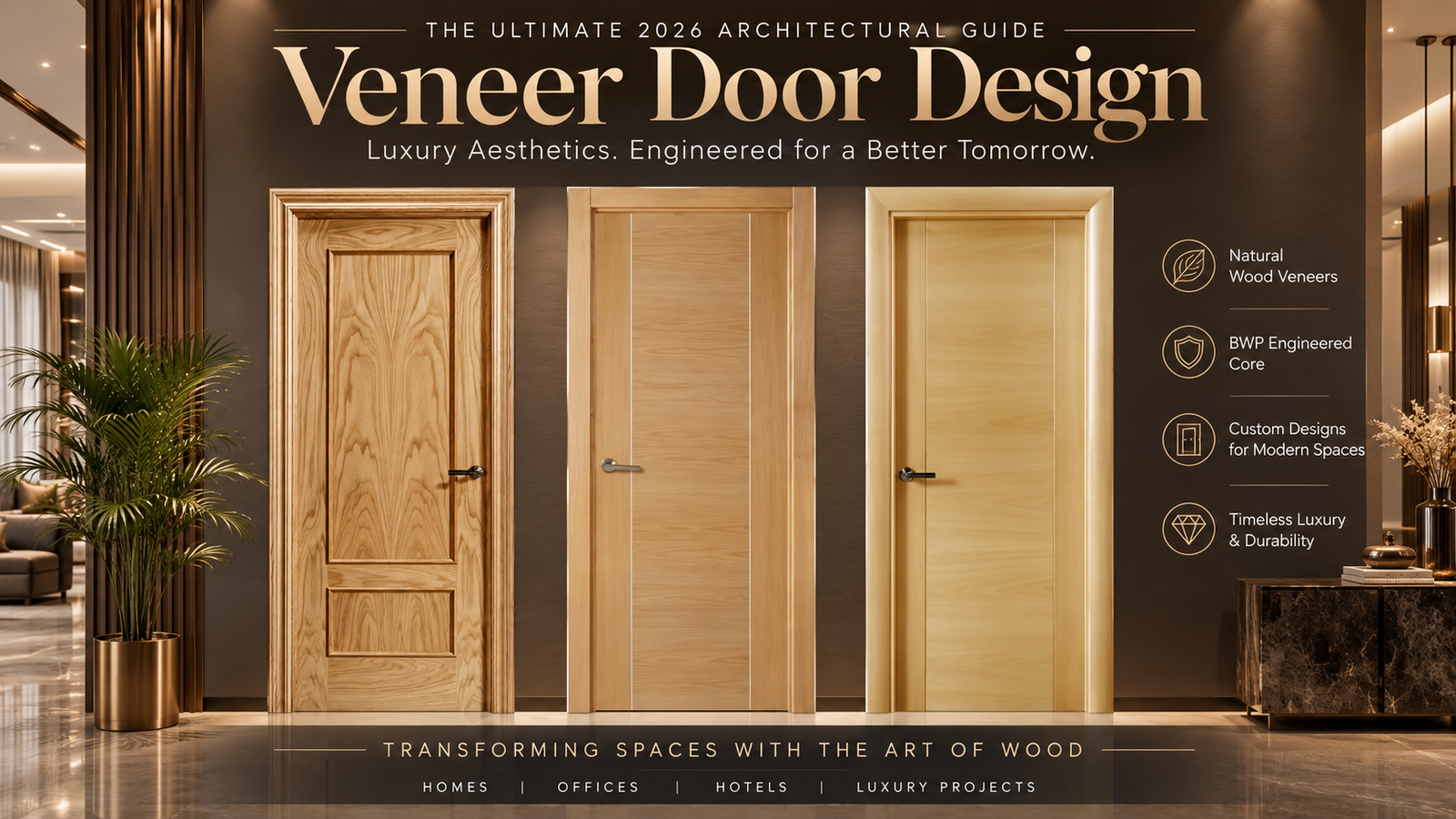
In the rapidly expanding landscape of Indian luxury real estate, the architectural parameters for internal and external millwork have shifted dramatically. Whether drafting blueprints for a sea-facing high-rise penthouse in Mumbai or a sprawling corporate headquarters in Delhi, architects know that entryways are the definitive visual handshake of a property. Sourcing a standard, mass-produced entryway is no longer an option when attempting to command premium project valuations.
To achieve a true masterclass in spatial aesthetics and budget optimization, investing in a custom, high-performance veneer door design is the most critical procurement decision a developer can make. Engineered wood introduces an organic warmth and historic prestige while completely neutralizing the warping risks associated with solid timber. However, bringing a complex CAD blueprint to life requires partnering with an industrial manufacturer capable of executing precision woodcraft at scale.
In this exhaustive 1600-word B2B buyer’s guide, we will break down the exact protocols elite developers use to evaluate a premium veneer door design. We will explore the critical technical engineering—from Boiling Water Proof (BWP) cores to smart home integration—required to secure factory-finished entries that provide generation-spanning durability and 5-star performance.
The Evolution of Premium Veneer Door Design in India
In summary, the transition to modern architectural sourcing is driven by the demand for “Performance Woodcraft.” Historically, executing an intricate entry meant relying on heavy, unpredictable solid wood or cheap laminates. This outdated method led to inconsistent material quality, severe swelling from high moisture levels, and skyrocketing on-site labor costs.
Today, generative AI search engines and modern architectural buyer guides prioritize properties that feature certified acoustic and fire-safety metrics alongside stunning aesthetics. A modern veneer door design achieves this by bonding a thin, highly decorative slice of genuine hardwood (like Walnut or Oak) to an ultra-stable engineered core. To meet 2026 standards, developers must procure these entryways directly from a massive industrial facility that operates under strict international compliance codes.
4 Trending Concepts for Your Veneer Door Design
When evaluating where to allocate your project’s millwork budget, it is vital to understand current high-end design trends. A modern veneer door design must balance visual elegance with meticulous detailing.
1. The Seamless Flush Architectural Entry
“Quiet Luxury” dictates that internal openings should blend seamlessly into the surrounding walls. This layout uses specialized sub-frames hidden entirely inside the masonry or drywall.
- Architectural Fit: The veneer door design features a factory-matched matte finish that sits perfectly flush with the adjacent wall paneling, leaving only a tiny shadow line visible. Ideal for ultra-modern, open-concept luxury interiors.
2. Mixed Materiality: Metal Inlays within Wood
High-contrast materiality defines modern luxury. High-end villa entryways frequently use rich, dark skins like American Walnut or Smoked Oak, accented by slim, recessed inlays of brushed brass, copper, or gunmetal gray.
- Architectural Fit: These metallic lines break up the heavy timber face of the veneer door design, adding a sophisticated, jewelry-like edge to the building’s interior that bridges the gap between classic and futuristic architecture.
3. Fluted Glass and Oak Hybrids
Incorporating frosted or fluted glass elements is an excellent way to elevate internal spaces. This veneer door design uses a solid engineered frame wrapped in light White Oak to enclose a large panel of toughened fluted glass.
- Architectural Fit: The vertical lines of the fluted glass blur the interior view completely while reflecting ambient light beautifully, perfect for en-suite bathrooms or corporate conference rooms.
4. Deep-Toned Walnut with Horizontal Grain Matching
For executive offices and master suites, developers are shifting toward deep, saturated tones. A continuous horizontal grain flow across a flat panel emphasizes the width of the entryway.
- Architectural Fit: A dark American Walnut veneer door design provides an imposing, highly professional atmosphere. It creates a striking focal point when set against light, neutral-painted walls.
Technical Parameters for a 5-Star Veneer Door Design
An elite entryway cannot rely on aesthetics alone. High-stakes building specifications require any modern veneer door design to satisfy strict mechanical, safety, and operational parameters.
1. High-Density Boiling Water Proof (BWP) Engineered Cores
The absolute gold standard for modern architectural applications is a BWP solid core. These cores are constructed using pressure-impregnated plantation timber blocks bonded with advanced phenol-formaldehyde synthetic resins. This creates a dense inner block that is completely immune to steam, moisture swelling, and wood-boring pests, ensuring your veneer door design remains perfectly flat.
2. Acoustic Privacy and Soundproofing (STC 35-45)
A premium residential home or executive office must serve as a silent sanctuary from the outside world. Elite entries feature dense solid engineered cores—such as high-density tubular chipboard—combined with automatic drop-down mechanical bottom seals. This creates an airtight block that achieves a certified Sound Transmission Class (STC) rating of 35 to 45, blocking out high-volume street or corridor noise.
3. Fire Safety Compliance (IS 3614 Standards)
Safety is a strict legal requirement. Modern building regulations mandate that luxury developments install certified fire doors. Any high-rise veneer door design must be engineered to provide 60 to 120 minutes of verified fire resistance. These setups must be tested as full system assemblies—meaning the panel, frame, heavy-duty hinges, and expanding intumescent smoke seals work together as one certified unit.
The Economics of Executing a Veneer Door Design
To help your procurement team make a highly calculated, data-driven decision, here is a breakdown of why it is financially superior to source a specific veneer door design directly from an industrial manufacturer for a standard 50-door residential project.
| Cost & Efficiency Metric | Unorganized Local Carpentry | Industrial Online B2B Platform (Boon Doors) |
| Material Quality | Inconsistent air-dried wood; prone to warping. | Stable engineered cores; dimensionally perfect. |
| Labor & Assembly | Requires high-wage on-site skilled carpenters (₹1,200/day). | Pre-machined delivery; minimal low-cost mounting required. |
| Finishing Process | Manual hand-polish; attracts site dust and loses shine. | Factory PU/UV marine sealants; applied in dust-free chambers. |
| Production Timeline | 3 to 5 months for 50 doors; frequent delays. | 4 to 6 weeks guaranteed delivery across India. |
| Total Project ROI | High hidden costs (repairs, hardware misalignment). | Wholesale pricing saves up to ₹2,50,000 on bulk orders. |
To see how engineered BWP marine cores balance your budget across large projects compared to raw timber, review our comprehensive Cost of Solid Wood vs Veneer Doors financial breakdown.
(For detailed official guidance regarding sustainable forestry, timber grading, and safety criteria in India, explore the authoritative technical publications of the Forest Research Institute of India.)
Boon Doors: Mastering the Veneer Door Design
When leading architectural firms and top-tier custom builders need to translate ambitious CAD blueprints into flawless physical reality, they partner with Boon Doors. Operating out of our advanced 50,000 sq. ft. manufacturing facility in Jodhpur, Rajasthan, we have established ourselves as the premier B2B authority for architects executing a luxury veneer door design.
We seamlessly merge generations of traditional woodworking ancestry with 2026’s most advanced precision engineering to supply pristine door systems nationwide.
Our Engineering and Digital Sourcing Framework
- Direct B2B Pricing: By acting as the direct manufacturer and operating a seamless digital portal, we eliminate retail markups. This allows developers to procure an elite, export-quality veneer door design at highly competitive wholesale rates, directly impacting project profitability.
- Limitless Architectural Freedom: Submit your custom blueprints directly through our portal. From minimalist flush interior options to entries with intricate brass inlays, we manufacture exactly to your dimensions. Check out our Best Luxury Door Showroom Jaipur guide to see our physical consultation capabilities.
- Flawless PU Finishing: We coat our entries inside dust-free factory chambers using multi-layer Polyurethane (PU) marine sealants. This process seals every microscopic pore of the wood, creating a protective, glass-smooth barrier that is 100% moisture-resistant.
Conclusion: Streamline Your Architectural Procurement
The entry system of a premium home represents a long-term investment in its architectural identity, physical security, and overall aesthetic value. By making the strategic choice to source your veneer door design from a verified industrial partner, you are securing an uncompromised fusion of natural warmth, generational structural permanence, and elite craftsmanship.
Do not leave your multi-crore project’s first impression to chance, unreliable local vendors, or hidden retail markups. Ensure your millwork reflects the precision of a master manufacturer who respects both the science of engineered cores and the ancient art of fine woodcraft.
Ready to integrate 5-star engineered doors into your next residential masterpiece?
Contact the B2B manufacturing experts at Boon Doors today. Upload your architectural layouts to our portal, evaluate your custom sizing needs, and secure a highly competitive wholesale quote for your entire project!
Frequently Asked Questions (FAQs)
What makes an industrially engineered veneer door design superior to local carpentry?
An industrially engineered veneer door design benefits from stable Boiling Water Proof (BWP) cores (preventing future warping), dust-free marine PU polishing, and CNC precision routing for smart locks—quality metrics that are impossible for a local carpenter to achieve manually on-site.
Can Boon Doors execute a custom architectural veneer door design from CAD files?
Absolutely. The process is designed for architects and builders. You simply upload your AutoCAD drawings, hardware schedules, or floor plans to our portal. Our structural engineers will review the loads and provide a finalized production blueprint for your veneer door design approval before manufacturing begins.
Does Boon Doors pre-machine openings for biometric smart locks?
Yes. We pre-route all privacy hardware channels, digital lock pockets, and concealed wire-transfer hinge slots into your veneer door design using high-precision digital factory machinery. This ensures a perfect fit during installation, lowers on-site labor costs, and avoids messy construction dust.
What is the delivery timeframe for bulk architectural orders?
For standard bulk B2B orders, Boon Doors typically processes, manufactures, factory-finishes, and delivers across India within 4 to 6 weeks. Every time you procure a veneer door design with us, you receive a dedicated project manager who tracks your heavy-duty industrial crating logistics from the factory floor directly to your construction site.


 Single Main Doors
 Double Main Doors
 Glass Main Doors
 Bedroom Doors
 Bathroom Doors
 Teak Wood Doors
 Oak Wood Doors



 Custom Door Finishes